Stitch Removal After Surgery Overseas
You had the surgery abroad, you have flown home, and the stitches are still in. Here is how the timing works, who can take them out in Singapore, and why the answer is sometimes a doctor rather than a nurse at home.
 homenurse.sg
General information, not a substitute for personal medical advice. For urgent symptoms, call 995.
First, the answer nobody wants
The surgeon who put the stitches in is always the right first call. They know what material was used, how many were placed, whether any are continuous rather than individual, and whether any were deliberately left long. Most overseas clinics expect international patients to stay one to two weeks precisely so they can remove the stitches themselves and check the healing before you fly.
If you are still abroad and reading this, the cheapest and safest option is almost always to change your flight rather than to arrange removal at home. Message the clinic and ask them directly — many will fit you in at short notice.
If you have already flown home, that option has gone, and the question becomes a practical one: who in Singapore can do it, and how quickly. Treat it as time-sensitive rather than something to sort out next week. Sutures left in beyond their window leave marks of their own.
When stitches usually come out
Timing varies by procedure and by surgeon. These are the windows surgeons generally work to — your own surgeon's instruction always overrides this table.
| Procedure | Usual removal |
|---|---|
| Double eyelid, non-incision | About 3 days |
| Double eyelid, partial incision | 4–5 days |
| Upper or lower blepharoplasty, full incision | 5–7 days |
| Rhinoplasty and facial procedures | 5–7 days (splint usually 5–6 days) |
| Body — abdominoplasty, breast, liposuction | 7–14 days |
| General and orthopaedic surgery, body sites | 7–14 days |
| Caesarean section | 5–10 days |
The distinction that decides who you see
There are two quite different jobs hiding behind the phrase "stitch removal", and they need different people.
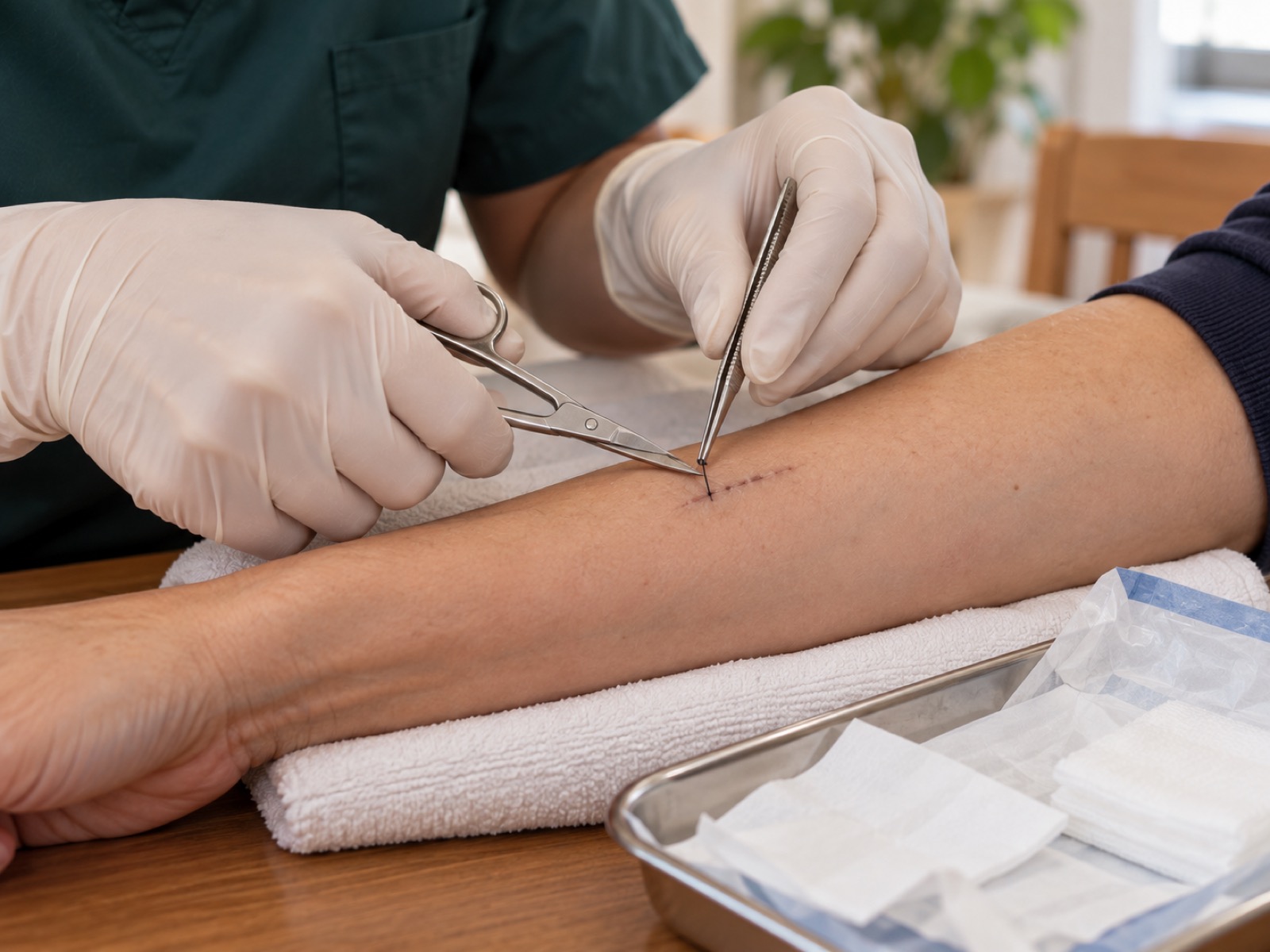
Body-site stitches and staples — abdominal and limb wounds after general, orthopaedic, obstetric or day surgery, and drain sites — are straightforward. An SNB-registered nurse can remove these at home. The wound is checked, the sutures come out one at a time, the site is redressed if needed, and a written summary goes to your doctor. At HomeNurse.sg that visit is typically S$120–200, consumables at cost.
Facial, eyelid and other cosmetic or aesthetic stitches are a different matter, and we do not remove them at home. The short version: the work is fine enough that ordinary instruments and ordinary light can cost you the result you paid for, a few eyelid techniques rely on a thread that is supposed to stay put, and nothing millimetres from an eye belongs on the edge of a sofa. Our stitch and staple removal page sets out the reasoning in full and lists the clinics we would suggest.
What to do if the surgery was cosmetic
See a doctor in a clinic. A general practitioner who does minor procedures can handle most body and facial work; eyelid sutures are better seen by an oculoplastic or plastic surgery service.
Bring whatever paperwork you have — the operation note, the discharge sheet, the aftercare instructions, even a photo of the packaging. Anything that tells the doctor what was used helps. Photographs of the wound at the time of surgery, and now, are also useful.
Our stitch and staple removal page lists the clinics we would suggest, with their own contact details. Each one sets and confirms its own fee, so contact them directly.
If the wound does not look right
Long-haul flights, humidity and a fortnight of self-care are not ideal conditions for a fresh wound. Increasing redness spreading from the incision, warmth, discharge or pus, a smell, wound edges separating, or a fever are all reasons to be seen the same day rather than waiting for the removal appointment.
For anything that looks like a spreading infection, or if you feel generally unwell with it, go to A&E rather than waiting for a clinic slot. If the patient is very unwell, call 995.
Practical points people ask about
- Absorbable stitches do not need removing, but not every stitch that looks absorbable is — check the operation note rather than assuming.
- A nasal splint after rhinoplasty is usually removed at the same visit as the stitches, and that is a doctor's job.
- Steri-strips and glue come off on their own; peeling them early can open the wound.
- Travel insurance sometimes covers a follow-up consultation at home. It rarely covers revision surgery.
- Keep the wound dry and out of direct sun until it has fully healed — pigmentation from early sun exposure is common in Singapore and hard to undo.
Common questions
I had surgery in Korea and flew home with stitches in. Who removes them in Singapore?
For body-site stitches after general, orthopaedic, obstetric or day surgery, an SNB-registered nurse can remove them at home, typically S$120–200 per visit. For facial, eyelid or other cosmetic stitches, see a doctor in a clinic — we do not do those at home, and we will point you to somewhere that does.
How long can stitches safely stay in?
It depends on the site. Facial sutures are usually out within about a week; body-site sutures commonly at 7 to 14 days. Left significantly beyond the window, stitches can leave their own marks. If you are past the date your surgeon gave you, treat it as time-sensitive.
I had cosmetic surgery abroad — can a nurse take the stitches out at my hotel or flat?
No. Cosmetic and aesthetic sutures are removed by a doctor in a clinic, not by a nurse at home, and that applies whether the surgery was done in Singapore or overseas. Bring whatever paperwork the overseas clinic gave you; it tells the doctor what was used and how many were placed.
What should I bring to the appointment?
The operation note or discharge sheet, the aftercare instructions, and photos of the wound at the time of surgery and now. Anything that tells the doctor what suture material was used and how many were placed.
My wound looks red and is oozing. Should I still wait for the removal date?
No. Spreading redness, warmth, discharge, a smell, separating wound edges or a fever are reasons to be seen the same day. If you feel generally unwell with it, go to A&E rather than waiting.
Is it cheaper to fly back to the clinic that did the surgery?
Almost never, once you include the flight — but it is often safer, because that surgeon knows exactly what they placed. If you are still abroad and within the removal window, changing your return flight is usually the better decision.