Diabetes Care at Home: Insulin and Blood Sugar
Good diabetes care at home is more than an injection. Here's what a nurse actually watches for — and the warning signs every caregiver should know.
 homenurse.sg
General information, not a substitute for personal medical advice. For urgent symptoms, call 995.
What good care looks like
Good home nursing is more than completing a task. For diabetes care, it means a trained nurse who works cleanly and gently, checks how the patient is doing, keeps the family informed, and writes down what they found so the patient's doctor stays in the loop. The best sign of good care is that nothing is a surprise — the family knows what was done, what to watch for, and when the next visit is.
Insulin, given safely
Insulin is a safe medicine given carefully and a dangerous one given carelessly — the dose has to match the prescription every single time. A good nurse checks the insulin type and the number of units before drawing up, rotates the injection site so the same spot isn't used over and over (repeated use causes lumps that change how insulin is absorbed), and injects into the fatty layer rather than muscle. If the family is learning, the nurse watches them do it and corrects gently.
Blood glucose that actually means something
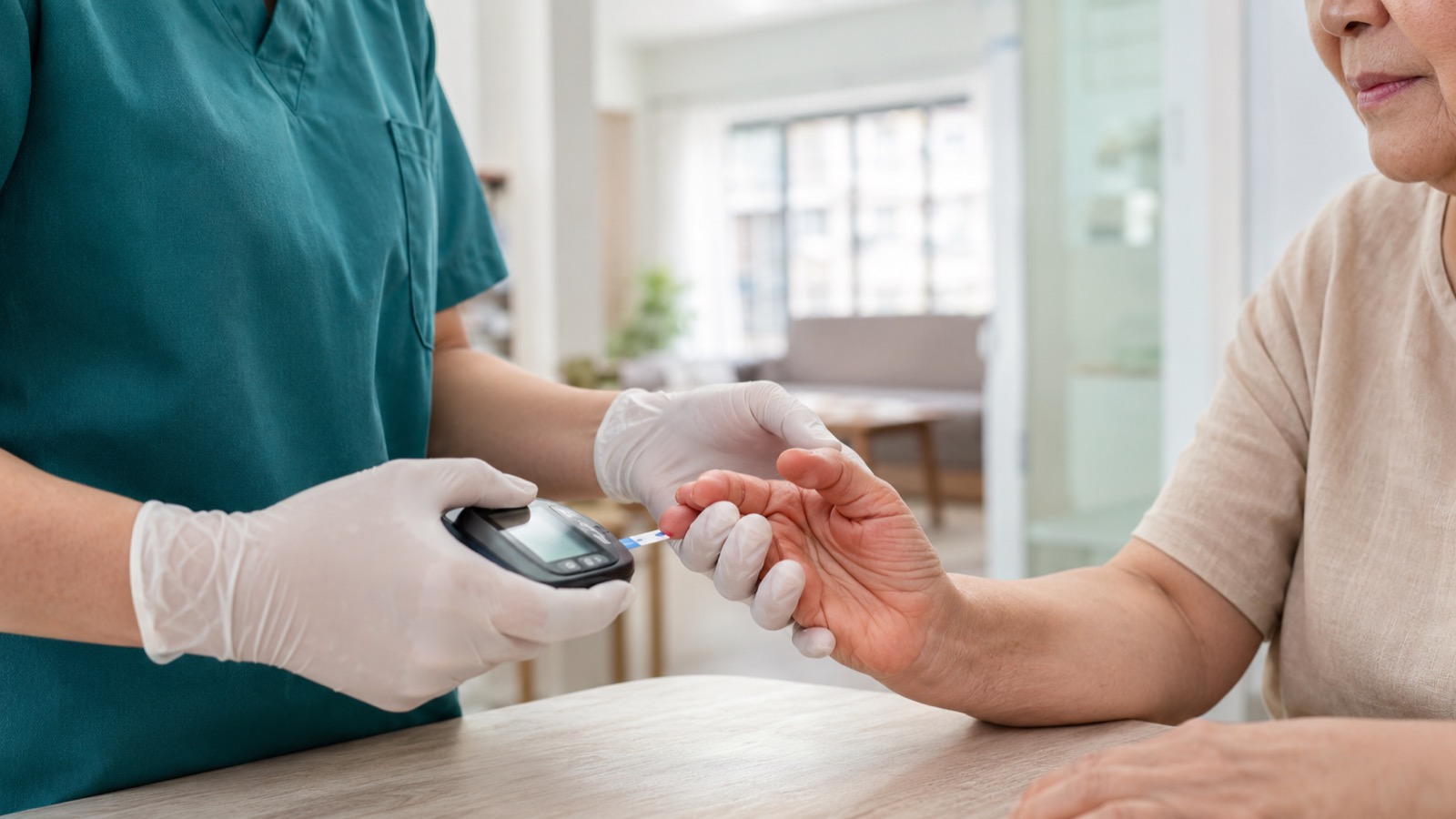
A single reading is just a number; the pattern is what matters. Good care means checking at the times that show how treatment is working — before meals, before bed, or when the person feels unwell — and writing the readings down so the doctor can adjust the insulin. A nurse also explains what a reading means in the moment: whether to eat something, hold a dose, or call for help.
Don't forget the feet
Diabetes quietly damages nerves and circulation, so a small foot wound can turn serious before the person even feels it. At each visit a good nurse looks at the feet — for cuts, blisters, redness between the toes, or an ulcer starting — because catching it early is the difference between a simple dressing and a hospital admission.
Spotting a hypo (low blood sugar)
A low blood sugar — a 'hypo' — is the most common diabetes emergency at home, and it can come on fast. The warning signs to know:
- Sudden sweating, shakiness, or a racing heart
- Confusion, slurred speech, or unusual irritability
- Drowsiness that's hard to rouse
When to call for help
- A hypo that doesn't improve after something sugary, or someone who can't safely swallow — call 995
- Very high readings with thirst, vomiting or drowsiness
- A foot cut, blister or ulcer, however small, that isn't healing