Caring for a PEG Feeding Tube at Home
A PEG tube can be part of comfortable home life for years. Good daily care keeps the site healthy and the tube working.
 homenurse.sg
General information, not a substitute for personal medical advice. For urgent symptoms, call 995.
What good care looks like
Good home nursing is more than completing a task. For PEG tube care, it means a trained nurse who works cleanly and gently, checks how the patient is doing, keeps the family informed, and writes down what they found so the patient's doctor stays in the loop. The best sign of good care is that nothing is a surprise — the family knows what was done, what to watch for, and when the next visit is.
Looking after the stoma site
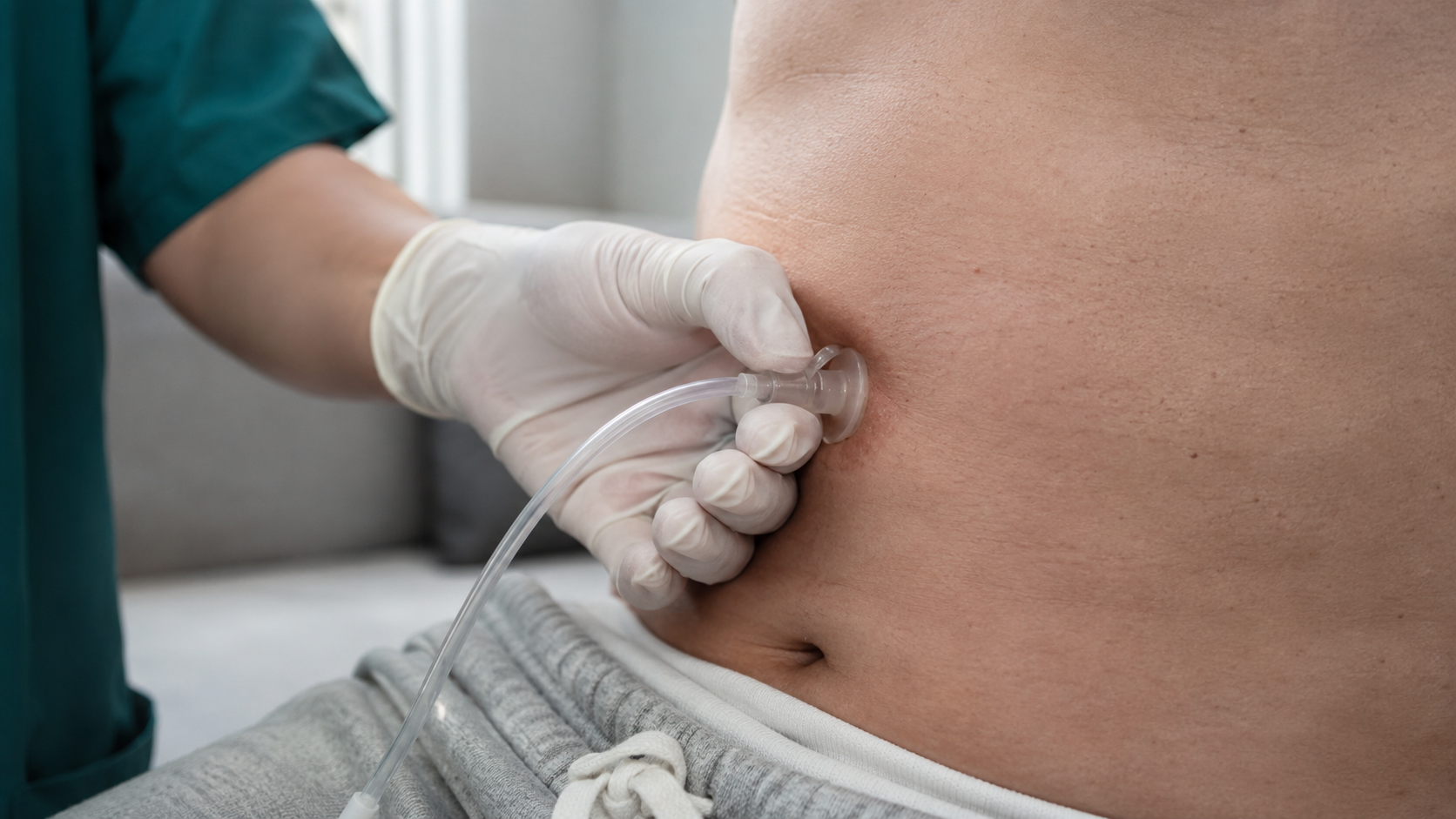
The small opening where the tube enters the tummy needs daily attention. Good care means keeping it clean and dry, checking for redness, swelling, or discharge, and gently rotating the tube if advised — all things a nurse can teach the family to do confidently.
Keeping the tube working
Flushing the tube before and after feeds and medications keeps it from blocking. Good nurses build this into the routine and show the family how, so a blockage doesn't turn into an emergency.
Feeds and medications
As with any tube feeding, having the person sitting up and giving feeds at the right rate matters. Medications should be given in a way that won't block the tube.
When to call for help
- The tube falls out — the opening can start to close within hours, so seek help promptly
- Redness, swelling, discharge, or bleeding at the site
- Pain, vomiting, or feed leaking around the tube